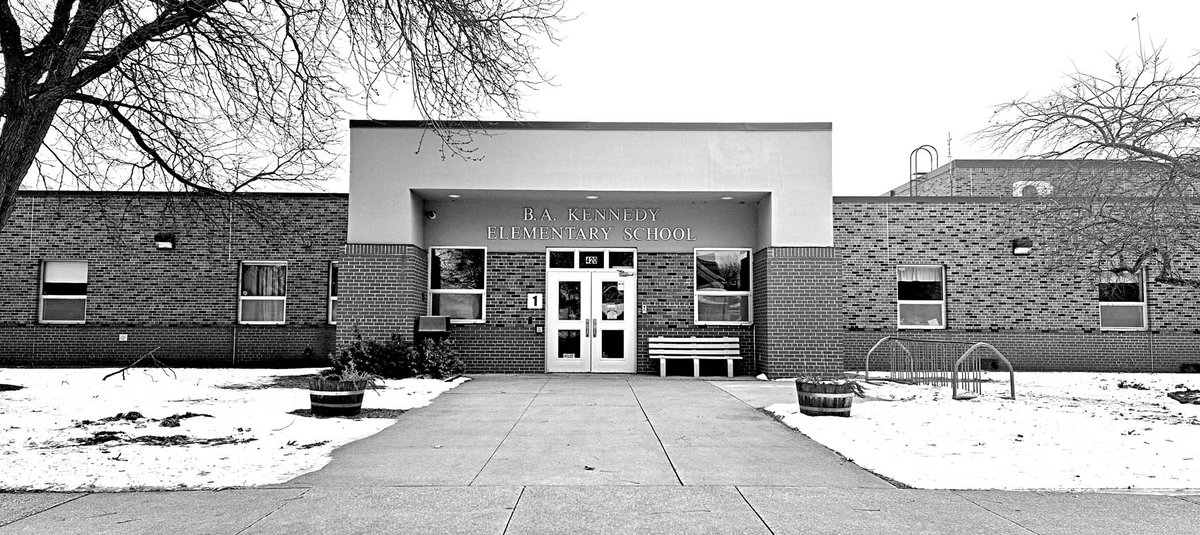
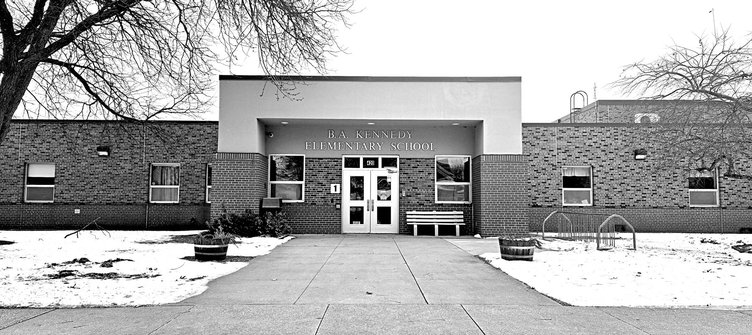
In the waning days of 2025, the Prairie du Chien Board of Education voted to close B.A. Kennedy before the start of the 2026–27 year, which will end the building’s century-long legacy as one of the community’s schools.
The board’s decision came after 18 months of discussions, which included starting the district’s Career and Technical Education (CTE) Center, Scenic Bluffs’ attempt to lease space at Bluff View and two failed operational referendums in the fall of 2024 and spring of 2025.
“It is hard, but change is inevitable,” Board President Nick Gilberts said. “We’re not the only community doing it — Spring Green and La Crosse are doing it.”
According to District Administrator Andy Banasik, declining enrollment and budget concerns are the primary reasons for closing the building.
“We did not want to close it, but our community spoke when they said no to those two operating referendums,” he said. “We’re going to have 100 [less] kids here in 2030 than we currently do right now, so how do we maintain those programs? Our next step had to be closing the building.”
While the administration and board of education are still working on plans for moving the students to Bluff View (as well as moving middle school students to the high school), B.A.K. closure is assured, and it’s not the first time the school has been on the proverbial chopping block.
History
B.A. Kennedy is the school district’s oldest building still in use. It was built in 1916 and went through extensive remodeling in 1948, 1954, 1979 and 1988.
The renovation in ‘88 took place because the district was experiencing overcrowding and a lack of usable space for school programs. Board President Mel Dow and Superintendent John Mulrooney outlined 17 areas of B.A. Kennedy that had “definite problems.”
According to an article in the Sept. 30, 1987, Courier Press, 28 teachers and nine individuals from the community attended a school board meeting on Monday, Sept. 28, regarding multiple proposals for the building.
“Board members and the administration continued to extol the advantages of remaining at the B.A. Kennedy School site,” the article said. “The indications were this is the best move.”
By 1994, the school district was again considering renovations to all of their buildings after failing to obtain a building referendum the previous year.
The 1993 referendum did not include any renovations for B.A. Kennedy, but the plans presented the next year offered a variety of different options for the site, ranging from $12 million to $19 million to renovate, build an addition or close the school building in favor of a new facility.
Four of the six proposals kept the elementary school grades at the B.A. Kennedy buildings, but two others proposed moving them to the middle school or to a new facility specifically for the elementary students, according to an article from the July 20, 1994, Courier Press.
The board decided to go through with a renovation of the existing building. By 1999, the district was putting those plans into action.
In the June 14, 1999, Courier Press, members of the community spoke in favor of closing B.A. Kennedy and selling it rather than going through with the renovation, citing a hypothetical cost savings of approximately $250,000.
Others in attendance pointed out that the school could save money by not having to continue maintaining all three buildings and paying for utilities.
Members of the community also pushed the board of education to go to another referendum to see “how the voters feel.”
At the time, Board Member Dewey Christoph said he did not believe a new referendum would pass because the trend at the time saw school referendums “being shot down in flames.” (The more things change, the more they stay the same.)
“Even if you ask for the same amount of money and not one penny more, I still don’t think it would pass. People want B.A.K. to remain a school,” he said at the time.
Even in 1999, declining enrollment was a hot topic in the district and a primary reason for looking at the closure of school buildings.
The Aug. 11, 1999, edition of the Courier Press said the community expected enrollment to increase with Cabela’s and the prison opening in the community; however, speakers during the board of education meetings implied these expectations were not met.
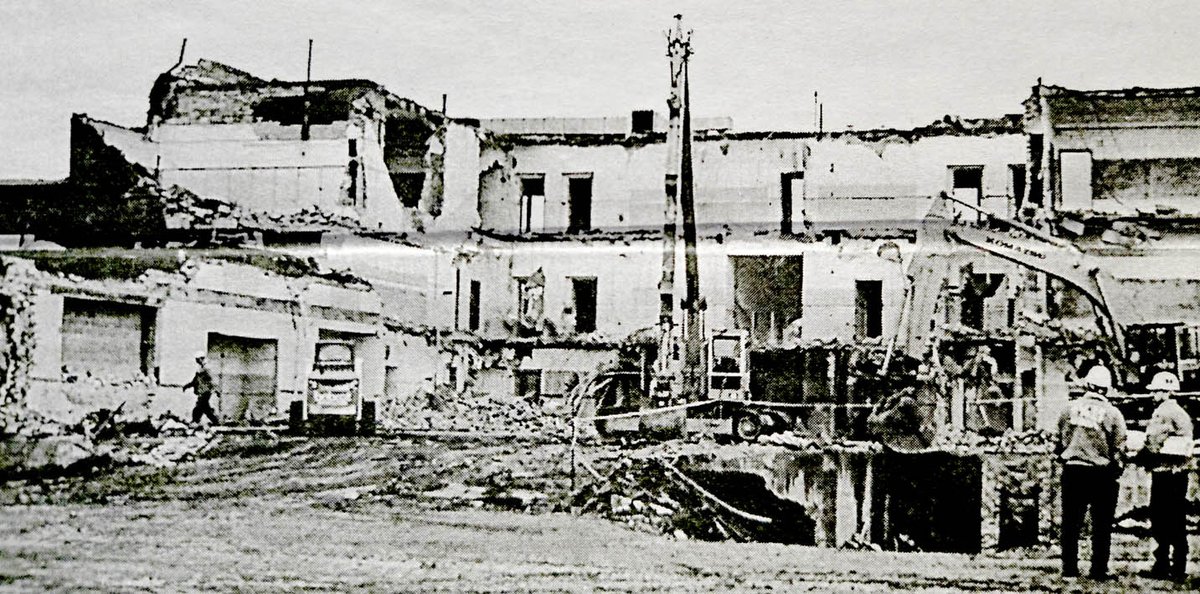
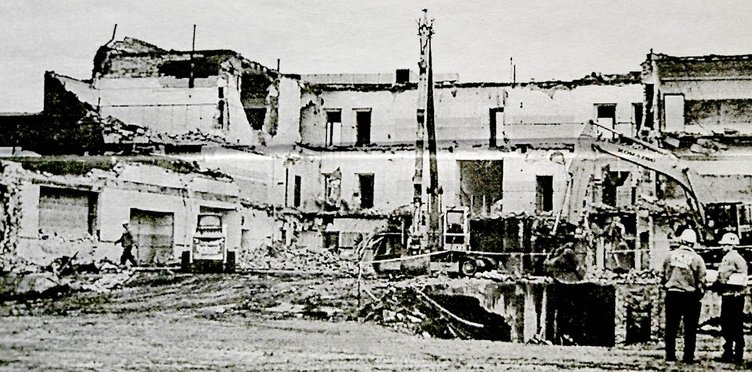
The renovation took place in the early 2000s at an estimated cost of $3.4 million. B.A.K. ended up with four new classrooms and upgrades to the boilers, ventilation systems and landscape, among other areas.
“The school (district) got an excellent buy because it didn’t have to rebuild the exterior walls,” said Pete Hilley, the project’s construction manager. “The structure was essentially gutted and rebuilt.”
“This should’ve been done three years ago,” said Board of Education President Merle Frommelt.
Speaking of the building’s history of construction improvements, Frommelt said, “There’s nothing left but people’s memories.”
Closing time
The closure of B.A. Kennedy may be the end of an era — the conclusion of more than a century of education.
But even as the book closes on the building’s story, Banasik said the school district is prepared to move forward with its most important asset: its teachers and staff.
“I know staff is going to do well once they move over to Bluff View. It’s going to take some time to adjust. There’s going to be an adjustment period that happens with our workforce and our educators that work every day with our kids.
“The most important thing in teaching is our teachers who meet with those students. Our staff does a tremendous job of working with our kids of all ages to see them have success stories.”