By Steve Van Kooten
The Crawford County Board of Supervisors put away one last meeting before the budget hearing next month.
The county officially announced that the hearing, which was scheduled for Nov. 11, will now take place on Nov. 12 to avoid Veterans Day.
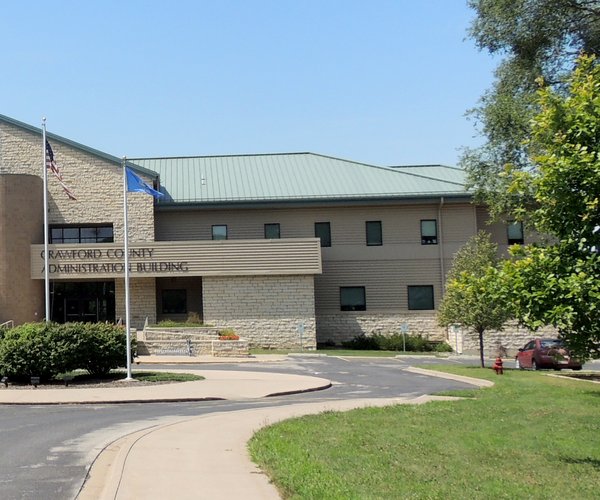
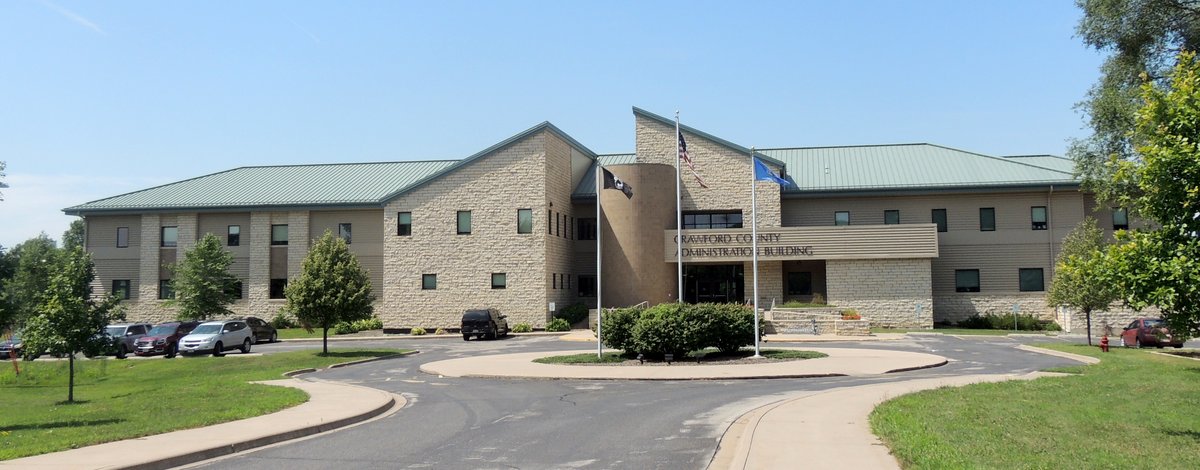
The hearing will take place at the County Administration Building in Prairie du Chien, and the supervisors will hold a meeting immediately thereafter to approve the presented budget.
Resolutions
The board approved a resolution in support of increasing state funding for the federally mandated Supplemental Nutrition Assistance Program (SNAP) during the meeting.
According to Dan McWilliams, director of the county’s Department of Health and Human Services, the bill reduced the amount of funding contributed to the program from the federal government.
"It changes the administration matching from the federal government from 50 percent to 25 percent, which means the state and county administering the food stamp program (SNAP) now have to contribute three dollars to get a dollar back,” he said.
He added that the change, which is set to take effect on Oct. 1 next year, will amount to an additional $14,000 for Crawford County and $17 million for the state of Wisconsin each year.
To counteract the loss of funding, the Wisconsin Department of Health Services (DHS) is requesting additional funding from the governor's office to help administer programs throughout the state.
DHS is asking for counties' support for the increase in funding. The resolution was created by the Wisconsin Counties Association and sent to each county for approval.
McWilliams noted that as funding from the federal government decreases, costs and regulation changes with the program are increasing, creating more burden on state and local governments.
"It's critical that we are adequately staffed because the reconciliation bill also sets the requirement that [the state's] error rate needs to be below six percent in SNAP benefits," said McWilliams. "If there's not enough funding, it makes it difficult to have enough staff to make sure we're doing everything correctly."
There are steep consequences if Wisconsin's collective error rate hits that six percent ceiling: the state has to pay five percent of the food-share program's cost, which amounts to approximately $69 million a year, according to DHS.
And if the error rate goes higher than six percent, the state's contribution goes up on a graduated scale.
Supervisor Craig Anderson asked what qualified as an error with the SNAP program.
"My understanding is that any error that results in a benefit a family gets being incorrect is an error that is going to be counted in that error rate the federal government cares about," answered McWilliams.
Errors can also come from a recipient not notifying the county of a change in status that would affect their benefit amount (e.g., a change in family size, employment status, etc.).
"So, we have to get it right," said McWilliams. "We have to make every effort to get how much money that goes out to each family absolutely correct."
Alice in Dairyland
Carol Roth and Connect Communities Gays Mills' Martha Querin-Schultz appeared at the meeting to review Alice in Dairyland's impact on Crawford County.
"You guys gave us some significant funding, and we wanted to show you the return on your investment with this project," said Roth.
The county was one of the financial contributors to the event, which operated on a $60,000 budget. Due to the plethora of contributions from the county and other entities, the project's Steering Committee had $30,000 left over after the event, according to Roth.
The remaining money was distributed throughout Crawford County to various causes, including every school's student lunch program (including DeSoto and Boscobel), the farmers markets, FFA chapters, the PAAC, the Gays Mills Library, and the Friends of Gays Mills, among several others.
"The money was donated here, and we wanted to keep all of that here," said Roth. "All of that money was donated to programs in the county."
The event also had a "significant" economic impact on the county.
The Wisconsin Department of Tourism tracked the event's economic impact using geofencing, a GPS technology that creates a virtual boundary around geographic areas and logs mobile devices entering and leaving the area over a specific timeframe.
According to Roth, spending in the county increased by nearly seven percent during the times when Alice events were taking place compared to 2024.
She added that the economic impact to the Gays Mills area was estimated to be more than $200,000.
In Prairie du Chien, spending reportedly increased approximately two and a half percent during the weekend of the finals, and the increased spending amount is more than what they saw in Gays Mills.
"People came: they stayed, they spent money, they ate at places, and they did things," said Roth.
Roth noted that those increases can be from other factors (such as other events going on during the same timeframe); however, she pointed out the year-over-year increase is still significant because many of those events also took place the year before.